This blog post was written by Richard Bonfiglio, Director of Advocacy and Community Outreach at Special Needs Support Center, a Cohort 6 Grantee.
When we talk about respite care, we usually place the family caregiver at the center. These individuals provide the support necessary for daily survival, such as scheduling clinical appointments, managing domestic tasks and navigating complex systems to advocate for the person they love.
Caregivers need real breaks. They need dedicated time to tend to their own medical care, maintain a household, foster relationships or simply exist outside their caregiving role.

Through our work at the Special Needs Support Center (SNSC), I have arrived at a firm conviction that our current paradigm is too narrow. Respite cannot just be a transaction to give a caregiver time away. An enlightened model should address two purposes: alleviating the weight on the caregiver while also providing social opportunities for the individual receiving support.
Social Isolation Is Part of the Problem
For many adults with disabilities, social isolation is a daily reality. In rural areas like our Upper Valley, VT, limited transportation and a lack of accessible civic spaces can lead to loneliness and isolation for both the caregiver and their loved one. When a household relies entirely on one person for mobility and companionship, isolation becomes a shared experience for both the caregiver and the person receiving care. Caregivers often find their social lives limited due to their responsibilities, and adults with disabilities often have limited opportunities to cultivate an autonomous identity.
Consider the Impact: The Power of Testimony
Heather Hansen, is a local mother of an adult whose needs and developmental delays do not fit a typical special needs box. When Heather’s child aged out of school, Heather found it extremely difficult to find anyone to provide respite. Not having a list of available respite providers or community volunteers led to Heather’s resignation from her job.
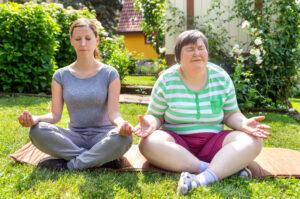
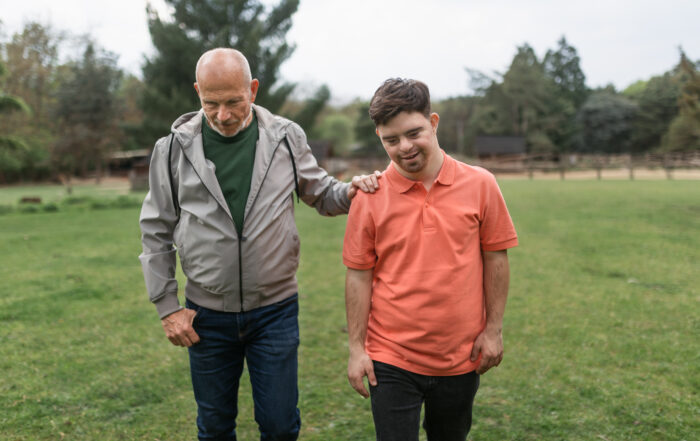
Many with developmental disabilities feel isolated, especially once they no longer attend school. Spending time with a community volunteer gives these individuals a sense of belonging, something to look forward to and some independence from their parent/s or full-time caregiver. Heather knows there is so much love, acceptance and friendship that individuals like her daughter have to give. A volunteer’s presence provides needed support to the caregiver and social connection to the care recipient. Having respite also gives the caregiver outreach and access to community.
Respite and Community Connection Belong Together
This philosophy shapes our approach at SNSC, where advocacy, respite and transportation work together. What may seem like separate challenges such as a missed appointment or a caregiver approaching a breaking point, should be addressed together. Rather than treating them as separate needs, we bring them together into one coordinated system of care.
Let’s reject the status quo of respite as “passive surveillance” where someone just “watches” an individual. Instead, imagine a volunteer arriving to share a hand of cards, navigate a puzzle or head to the local library for conversation.
Rethinking Volunteerism
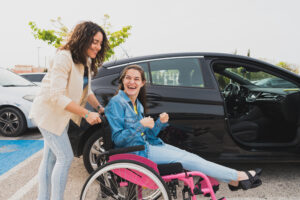 At SNSC, we are working to expand practical, community-based support for adults with disabilities and their families through two new initiatives. Our non-emergent ride initiative is designed to help adults with disabilities access appointments, community activities, errands, and other important destinations when transportation is a barrier. By connecting participants with trained volunteer drivers, we hope to increase independence and reduce isolation across the Upper Valley.
Our adult respite relief initiative focuses on supporting caregivers while also creating meaningful social connections for adults with disabilities. Trained volunteers can provide companionship and engaging activities, giving caregivers an opportunity to rest, attend appointments or simply take a needed break.
Both initiatives are built around the same goal: creating stronger connections, greater independence and a community where everyone has a sense of belonging.
The Goal Isn’t Just Respite. It’s Belonging.
To belong means to be known by name in your community and to have places and activities where others feel your absence when you don’t show up. For the caregiver, it means knowing you aren’t bearing this reality alone. We can activate neighbors, design flexible transportation and listen and respond to what caregivers and adults with disabilities want.
The question isn’t just, “How do we give this caregiver a break?” It must also be, “How do we make these hours meaningful and joyful for the person they love?” When we answer both, respite becomes the mechanism for a society where everyone truly belongs.