This blog post was provided by Sanford Center for Aging, a Cohort 6 Grantee.
“I don’t give out that recipe usually,” said Diana Beidel.
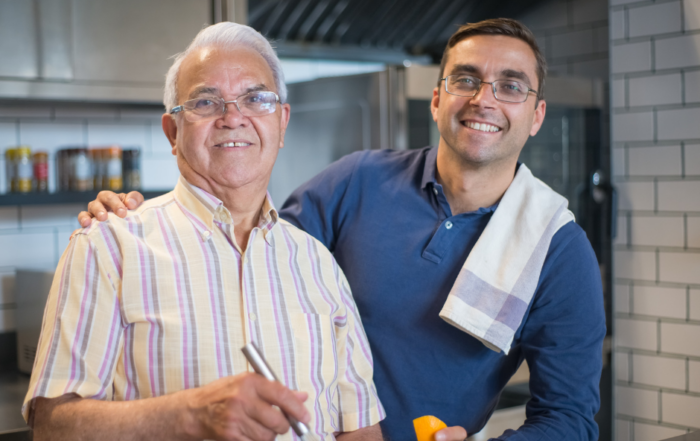
In her home, Diana prepared a cake with Jackie Springer, a volunteer with the Sanford Center for Aging in the volunteer-driven companionship program. As they shared the kitchen, they also shared connections, laughter and conversation while Jackie helped Diana find the words. In the pilot program, Jackie connects with both Diana and her husband, Jerry.
“I love that Diana can meet someone new,” said Jerry. “Jackie fits the bill. She is someone we can trust and has become part of the family.
Diana was diagnosed with dementia at the age of 56 as family and friends noticed a shift in her behavior. As a successful administrator, Diana was very organized and task-oriented, but due to cognitive changes, she couldn’t juggle those same responsibilities. In their home in Northern Nevada, Jerry is her primary caregiver and helps with all her day-to-day activities. He says he never expected to be a caregiver. Diana is surrounded by family and friends, and now the companionship program also provides another layer of connection.
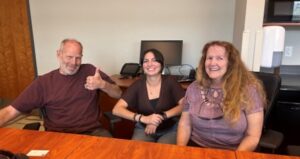
Pictured left to right: Jerry Beidel, Jackie Springer, Diana Beidelnother layer of connection.
In her role as a volunteer, Jackie visits Diana and Jerry. Funding from Community Care Corps (C3) allowed Sanford Center for Aging to expand services by addressing a critical service gap for older adults and caregivers. The C3 grant supports a volunteer-driven companionship program that benefits caregivers with sustained emotional support and reduced isolation, while care recipients gain consistent, meaningful social connections that enhance their quality of life.
“Friends of our neighbor hired help and didn’t have the best experience,” said Jerry. “The husband was the caregiver for his wife and said it felt like they couldn’t find that connection. A program like this could have made it so his wife could have stayed home longer, rather than going into a facility.”
“Jerry brings up an important aspect of this program. While in-home care agencies can provide hands-on assistance and care, our volunteers are choosing to share their time building a reliable, long-term relationship with the family,” said Crissa Markow, Director of Community Services at the Sanford Center for Aging that oversees the companionship program. “We spend a great deal of time with our volunteers during the onboarding and training process and really get to know them personally. Our program coordinator, Taylor Moen, has honed the process of pairing the right people together as we see with the match between Jackie, Jerry and Diana!”
AARP and the National Alliance for Caregiving reported that in Nevada 24 percent of adults serve as family caregivers, equating to 603,000 caregivers in the state. As caregivers, those individuals can experience a myriad of emotions, including high levels of stress, and many do not have assistance. It can also be difficult to recognize when you could use a little extra support and to know where to turn for that help.
Trained volunteer companions:
- Nurture a personal, relationship-based connection through regularly scheduled visits that incorporate conversation, active listening and engagement with the caregiver and recipient.
- Support caregivers in planning and prioritizing responsibilities for both self-care and care recipient needs; assist with reviewing eligibility for supportive services, accessing available resources and coordinating medical appointments.
- Share an activity with the caregiver and care recipient such as playing a card game or working on a craft.
- Accompany the care recipient door‑through‑door for appointments, social visits or shopping.
- Provide respite, allowing the caregiver to take a break to attend to their own needs, knowing their loved one is with a familiar, caring volunteer.
“I am enjoying it a lot and having fun spending that time together,” said Jackie. “Diana remembered my favorite drink and asked Jerry to get it for me. It was so touching to have her remember something about me. And it has been decided: we are going to make peanut butter bars next.”